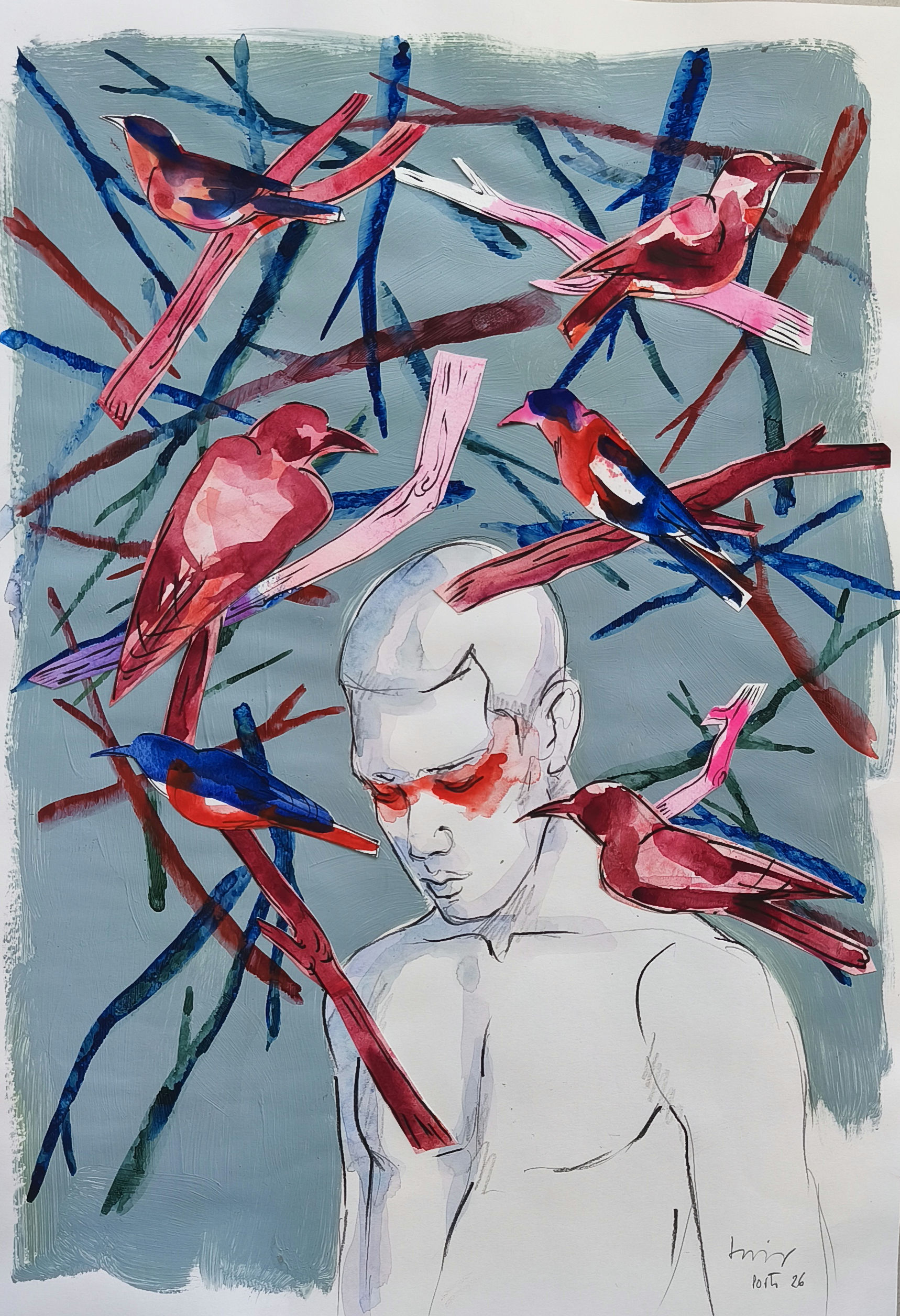
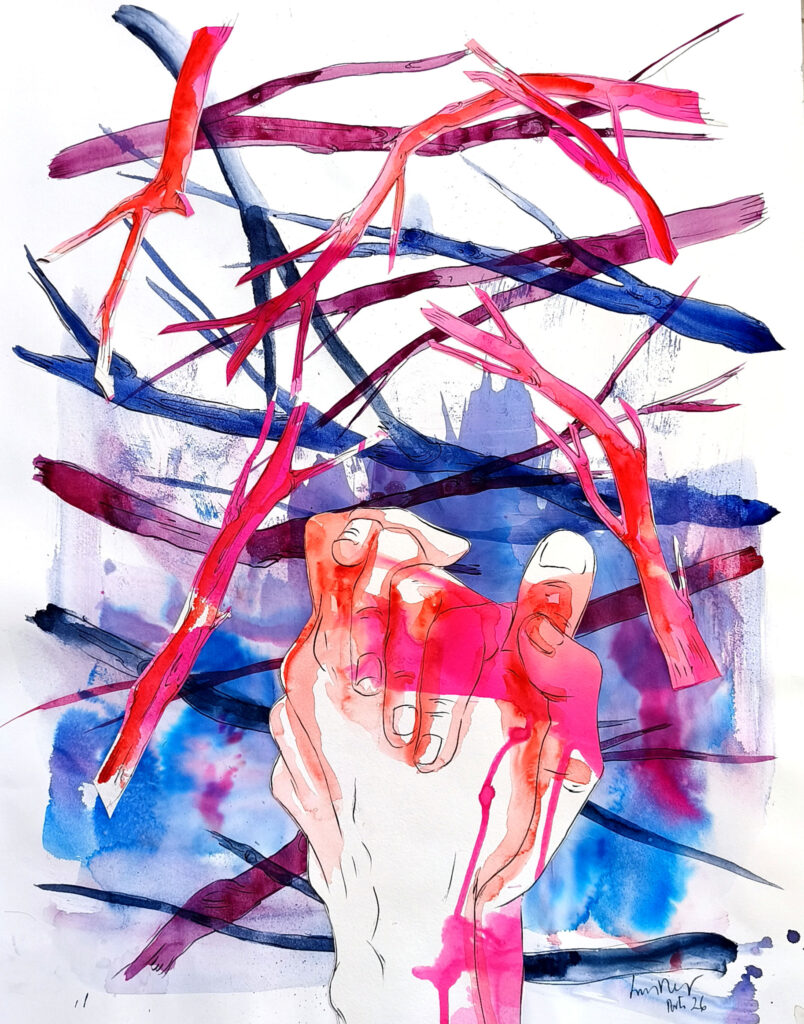
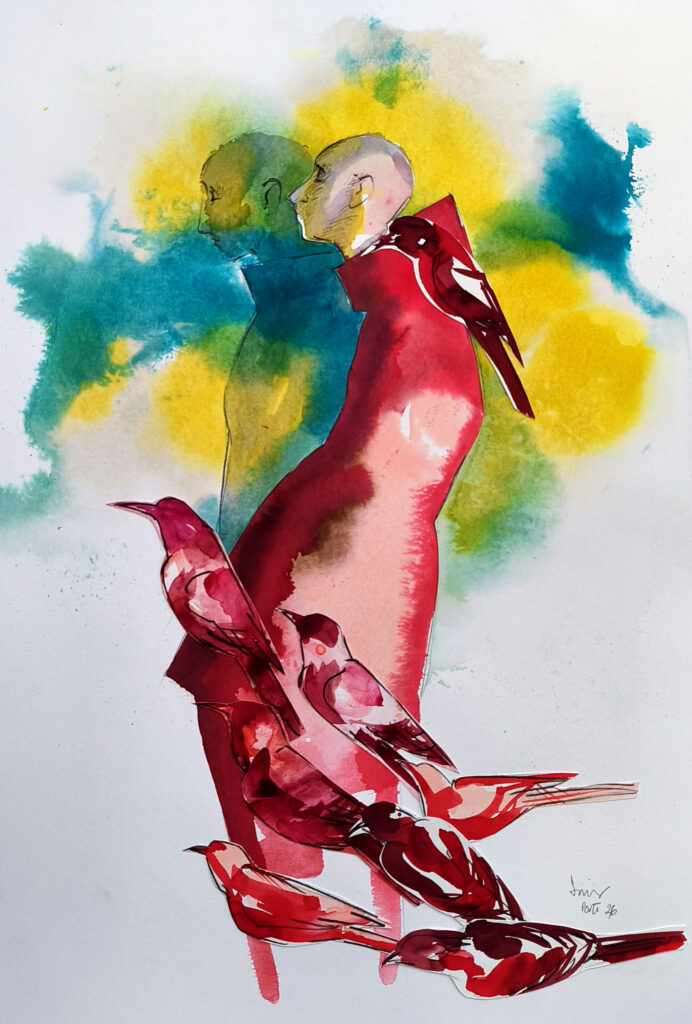
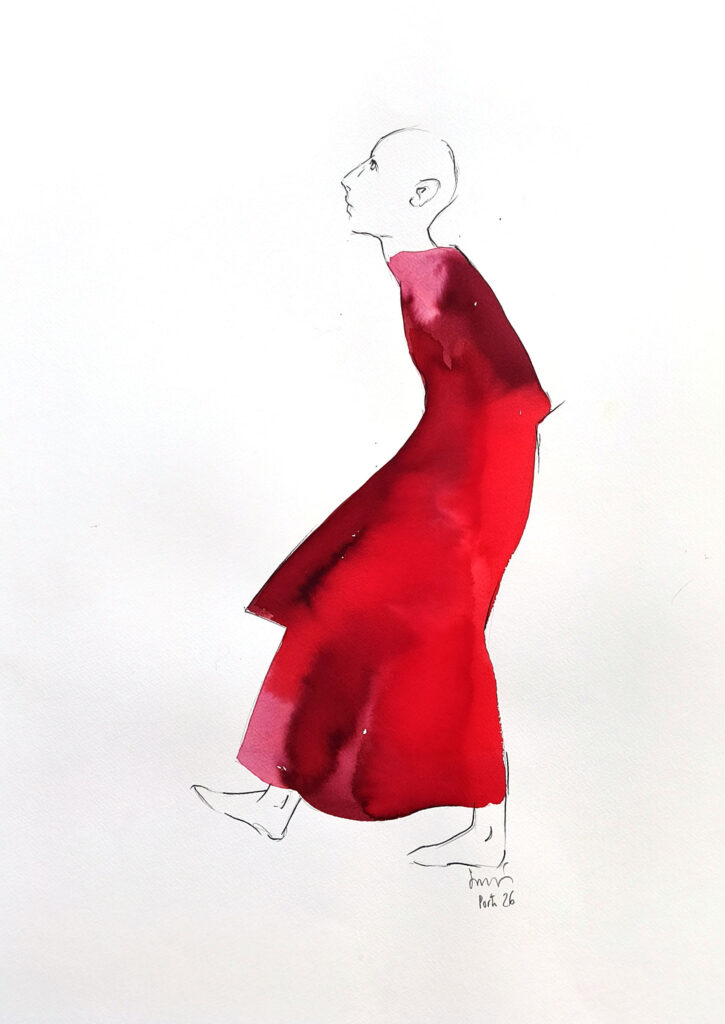
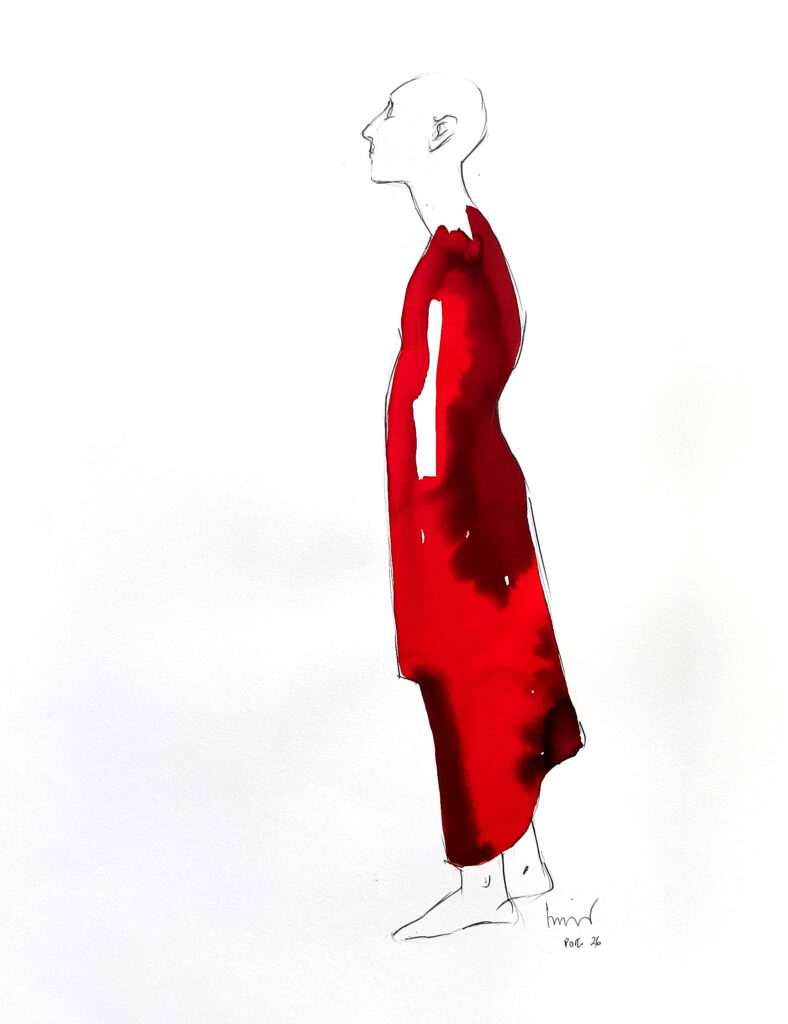
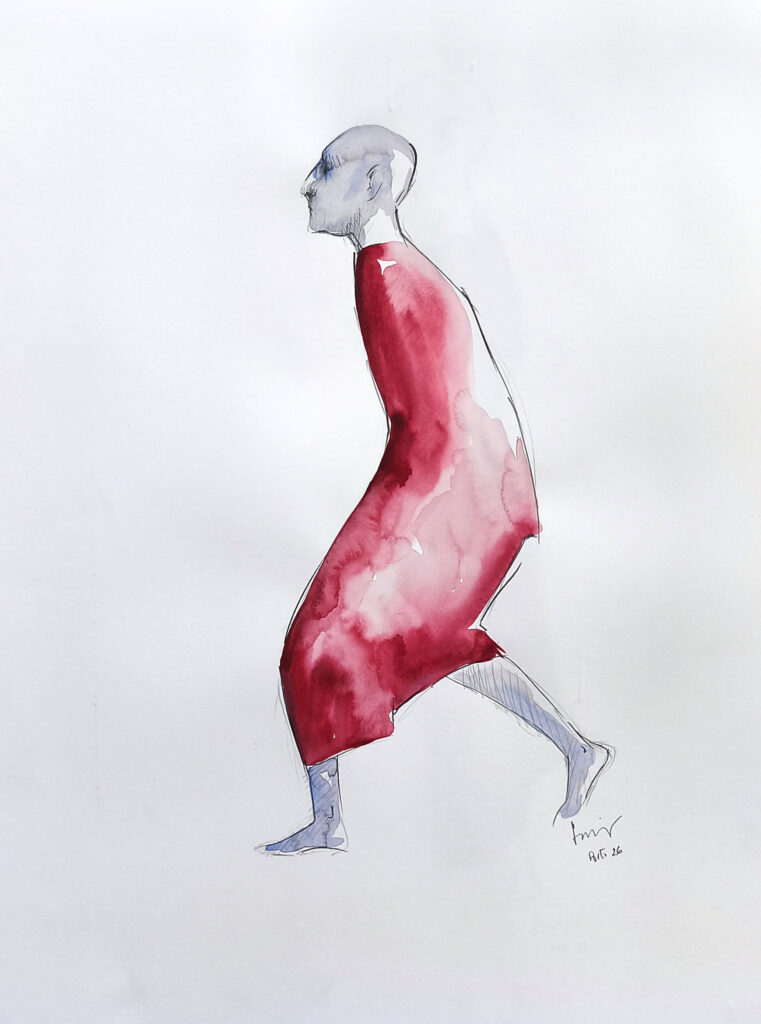
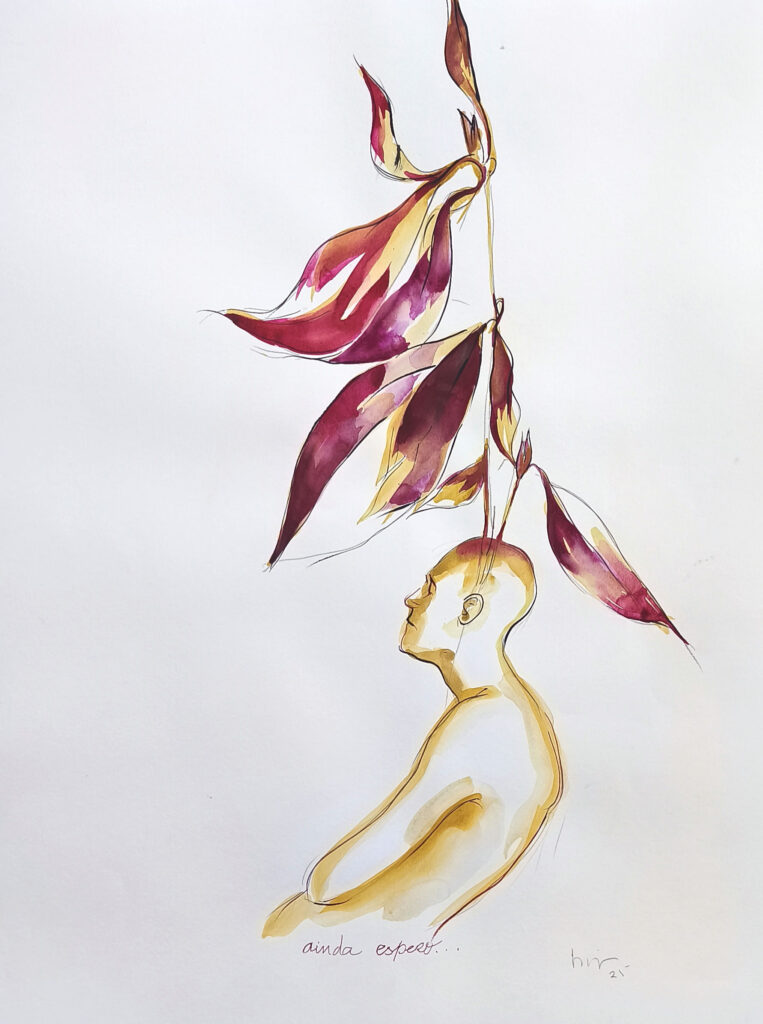
In MOMENT(o), the works exist through continuous overlays, drawing over drawing, painting over painting forming layers and multiple visions of existence. Each mark does not replace the previous one; it dialogues with it, transforms it, and settles upon it. The image is not fixed, but a body in constant reconfiguration.
As in Alice’s Adventures in Wonderland by Lewis Carroll, when asked “How long is forever?” and answered “Sometimes, just a second,” time here compresses and expands. Each layer is created in a precise instant, yet remains inscribed in the work. A second becomes permanent because it is not erased, but absorbed and sedimented. The surface becomes a territory of memory. Early lines persist, even when partially concealed, creating depth and tension. What is visible is only the latest decision; what is hidden gives the work density. Drawing and painting become acts of conscious accumulation. Rather than correcting, the process adds. Each layer reflects a moment of awareness — a state, doubt, or affirmation. The result is not a static image but a field of overlapping times, where past and present coexist. The works live not only in their final form, but in the thickness of their process. They are stratified constructions, visual organisms in which brief instants become eternal.
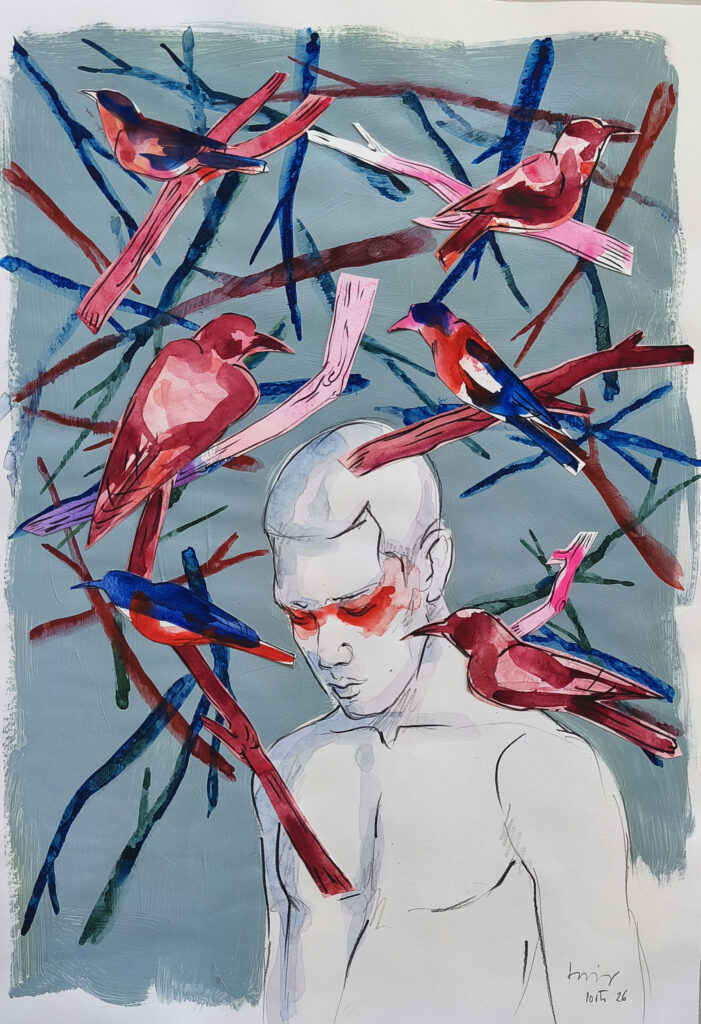
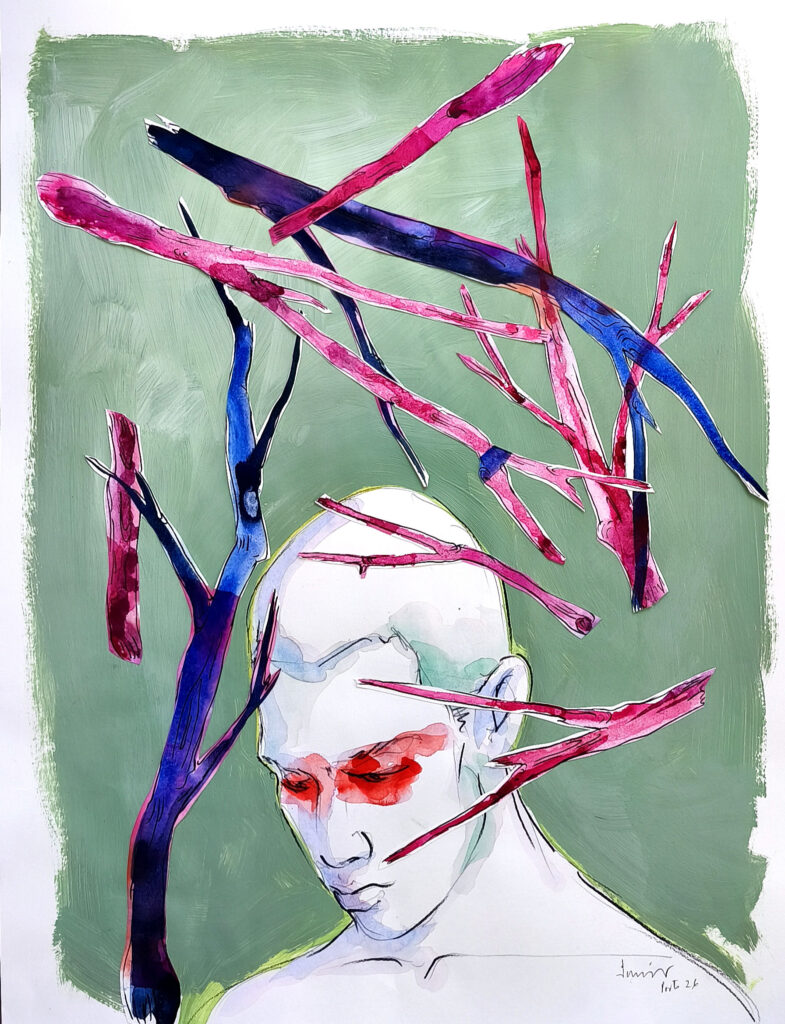
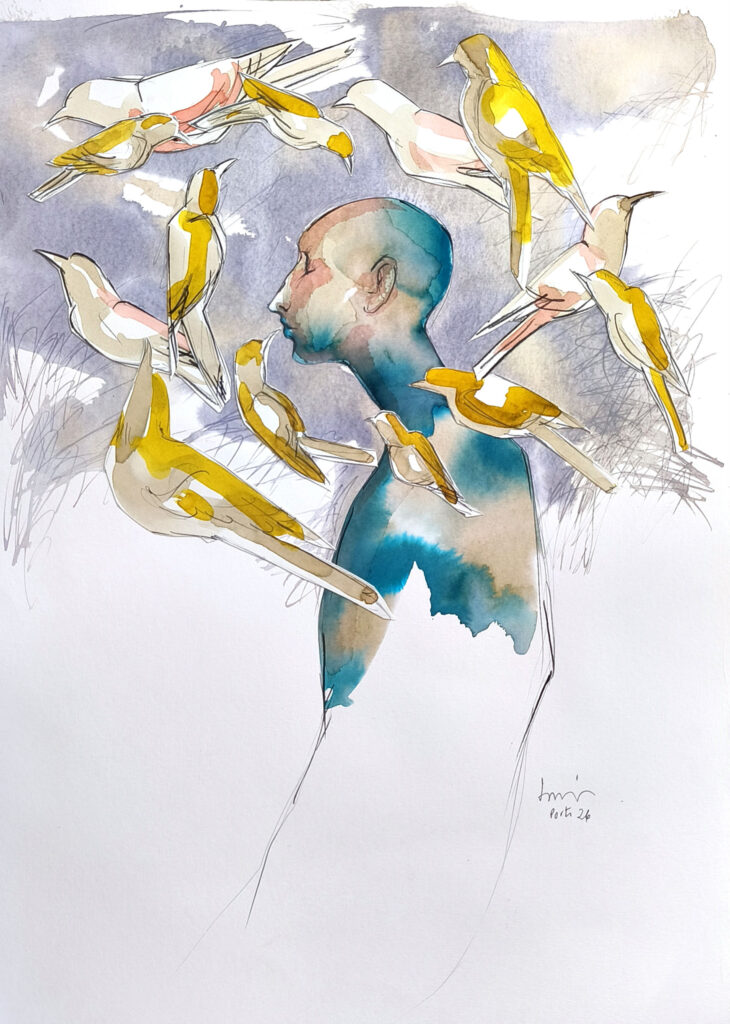
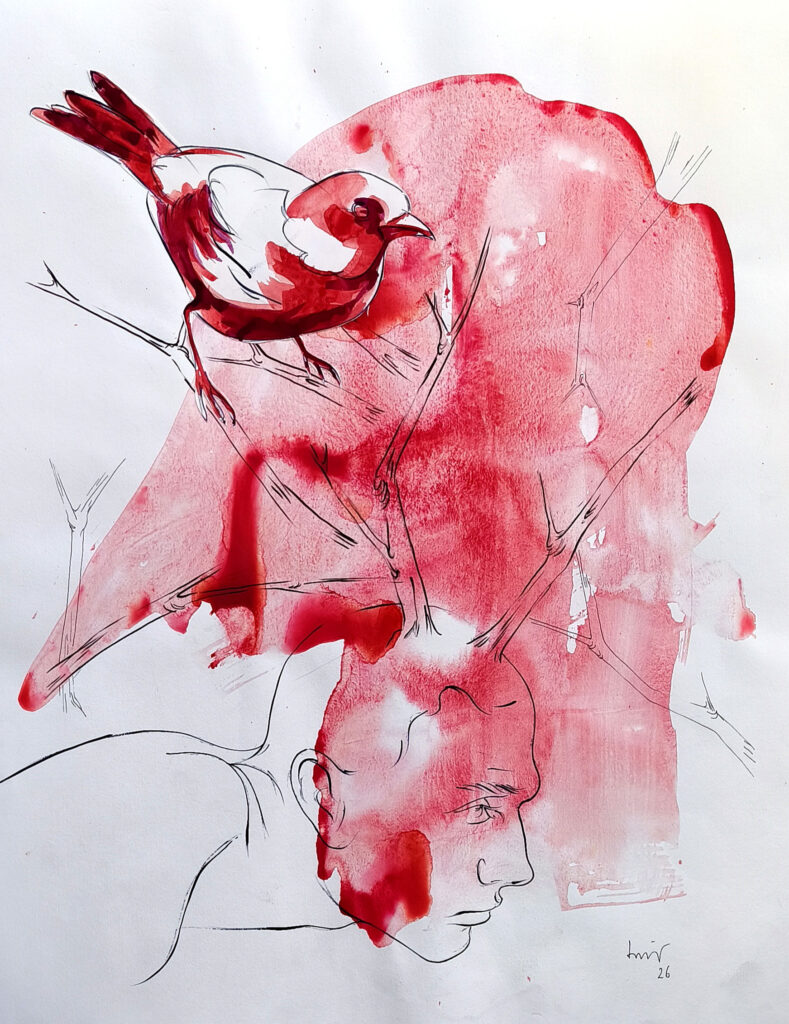
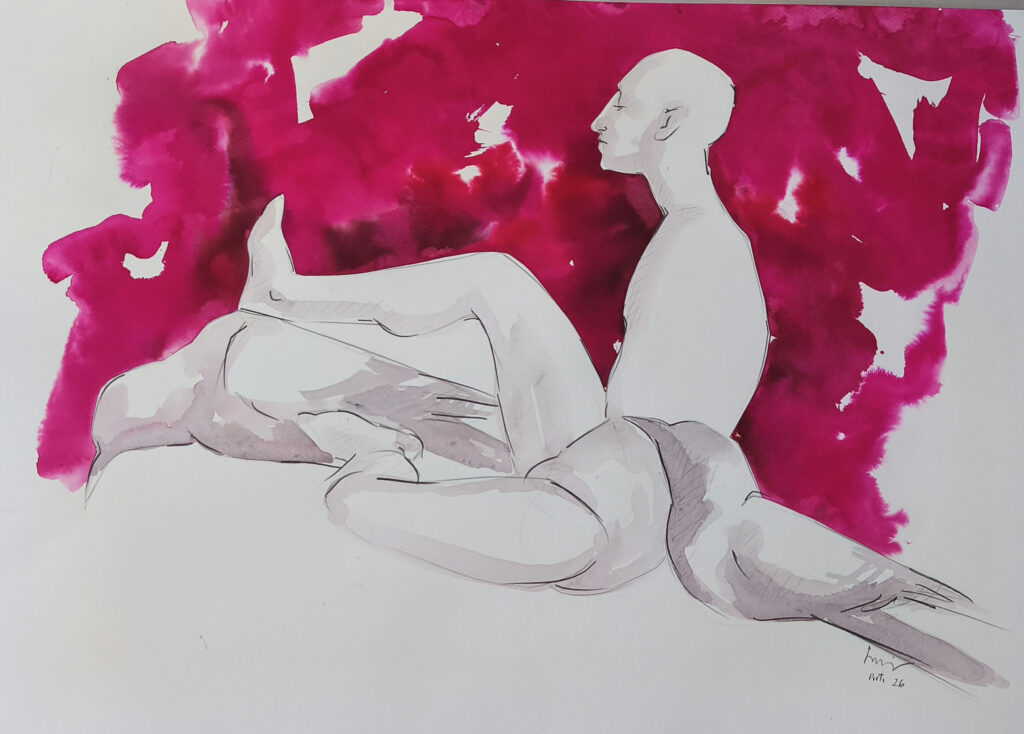
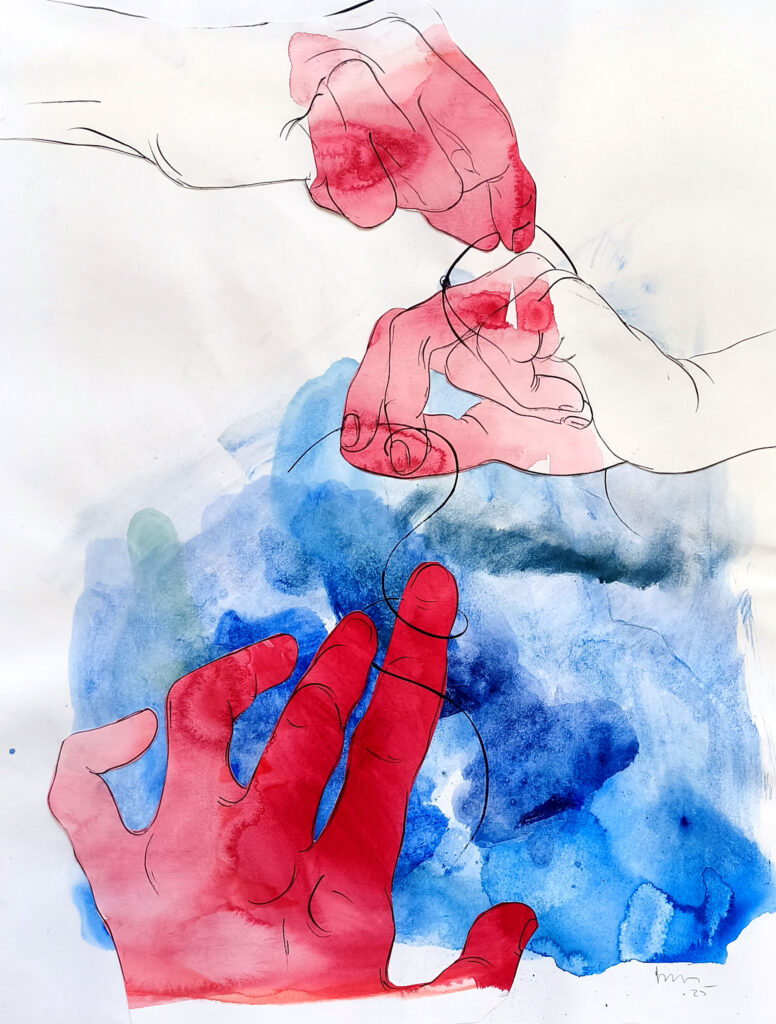
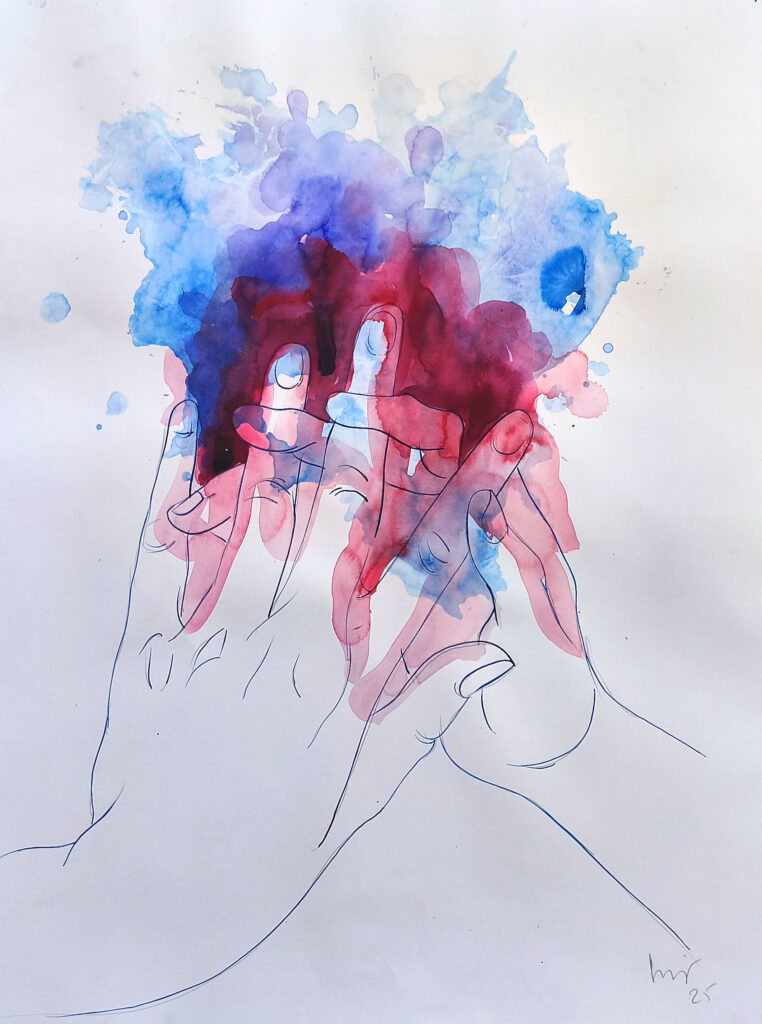
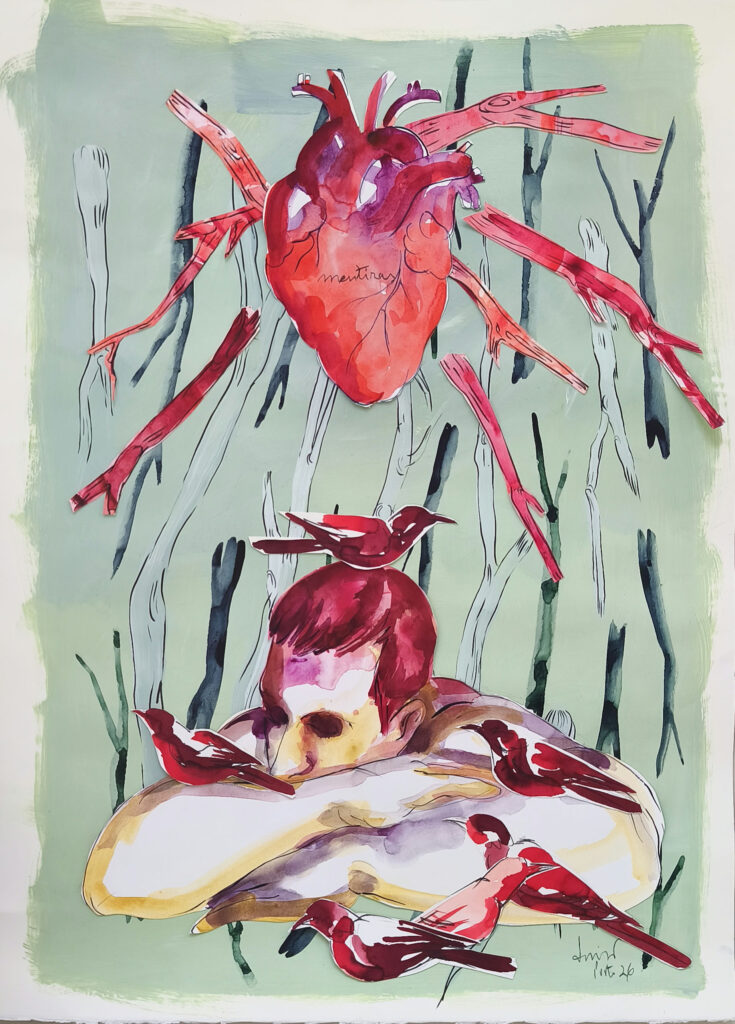
In some of them a blue-green wash forms an atmospheric, almost mental background. Over it, branches appear as fragmented lines crossing in multiple directions, not forming a tree but a network, lines of tension and connection, like an expanded nervous system. The birds, cut out and layered, cast shadows and create physical relief, extending into real space. Multiple planes emerge: the pictorial background, the linear branches, the three-dimensional cut-outs, and the drawn body. The central human figures, nearly colorless, appears withdrawn. The tilted face and eyes marked by intense red suggest interiority or excess of thought. Unlike the vibrant birds, the body seems almost transparente as if color inhabits the exterior while silence inhabits the interior. Repetition of birds and branches creates rhythm, with subtle variations that reinforce continuity within difference. Here, superimposition is both technical and psychological. The result is a field of coexistence interior and exterior, line and wash, silence and intensity.
The work does not present a fixed moment, but a state in process, where each layer remains even as another settles over it.
(Luís Melo – Porto 2026)